KCWA controls nearly every drop of water that flows through Kern County. But most residents have never heard of it, can't name their board representative, and have no voice in how it's run. That needs to change.
See the PlatformKCWA is too important to operate in the shadows. Here's what I believe the board should be doing — and isn't.
KCWA holds water rights on the Kern River and co-governs the Kern Water Bank. Rather than spending legal resources fighting river restoration, the board should be at the negotiating table finding solutions that work for farmers, cities, and the river itself. The state gave us bond money to restore flows through Bakersfield. That money was spent. The river is still dry. It's time to make good on that commitment.
KCWA manages close to a billion dollars in water infrastructure on behalf of every property owner in Kern County. Yet most residents can't name their board director, find no candidate websites, and learn about major governance decisions only through the occasional news article. Transparency isn't optional for a public agency of this size. I'll push for plain-language reporting, an accessible public presence, and meaningful community input — not just formal compliance.
The KCWA board has historically been shaped by agricultural water interests — and agricultural water matters enormously in Kern County. But so does the water that flows to homes, schools, and businesses in Bakersfield. Urban and suburban residents deserve a board member who understands their community and advocates for balanced decision-making that serves all of Kern County, not just its farming interests.
The Kern County Subbasin — the largest groundwater basin in California — is at risk of state probationary designation under SGMA. The decisions being made right now about pumping limits, recharge, and long-term aquifer health will determine whether this region has reliable water a generation from now. I believe those decisions need to be made transparently, with meaningful input from disadvantaged communities, small farmers, and urban households alike.
Kern County has one of the largest Spanish-speaking populations in California — farmworkers, families, small business owners whose daily lives depend on water policy decisions they have almost no access to. KCWA publishes no materials in Spanish. Its meetings are conducted without interpretation. Its website offers no translation. As a professor of Spanish linguistics who has worked in Kern County schools, clinics, and legal settings, I know exactly what it costs a community when powerful institutions don't communicate with them. I'll push for bilingual outreach, translated notices, and meaningful engagement with all of Kern County's residents — not just the ones who already know the right people.
The current board selection process — where directors routinely resign early so their colleagues can appoint a handpicked replacement who then runs as an incumbent — is a quiet subversion of democracy. It insulates the board from public accountability and keeps outsider perspectives from gaining a foothold. I believe board seats should be earned at the ballot box, not passed around inside a closed circle. Running openly and contesting this seat is itself a statement of that principle.
In 2000, California voters passed Proposition 13 — a $2 billion water bond. KCWA received $23 million of those public funds, specifically to restore minimum flows in the Kern River through the heart of Bakersfield. Six wells were built in 2002 as part of the "Kern River Restoration and Water Supply Program."
More than two decades later, those wells have never once been used to restore river flows. The water they pump goes instead to serve KCWA's contracted interests — while the river bed through Bakersfield stays dry. When there was excess water, some of it was sold at up to 10 times the market rate.
This is not a matter of competing priorities or complex tradeoffs. It is a straightforward question of whether a public agency honored the commitment it made to the public that funded it.
$23 million in Prop 13 bond funds received by KCWA for river restoration
6 Kern River Parkway wells built in 2002 — zero times used to flow the river
Excess water sold at up to 10× market rate instead of flowing to the river
These are questions every Kern County resident should be able to answer. Right now, most can't — and the agency has done little to change that.
KCWA board seats are rarely contested in elections. When a director decides to leave, the common practice is to resign before the term ends — triggering an appointment by the remaining board rather than a public vote. The appointee then campaigns as an incumbent. Over time, this has produced a board that is more self-selected than publicly accountable.
The recent hiring of former board president Eric Averett as General Manager — at a base salary of $525,000 plus a $60,000 signing bonus — was approved by the same board he had just led. Whatever the merits of the hire, the process raised legitimate questions about how this agency makes decisions about itself.
Transparency isn't about distrust — it's about earning trust. A truly public-serving KCWA would make it easy to know who your director is, how to reach them, and what votes they've taken. It would publish plain-language summaries of major decisions. It would hold community listening sessions, not just noticed public hearings. It would explain, in terms anyone can understand, how water is being managed and why.
That's not an unrealistic ask. It's the standard every school board and city council is held to. KCWA controls far more of Kern County's daily life than most of those bodies. It's time the agency acted like it answers to the public.
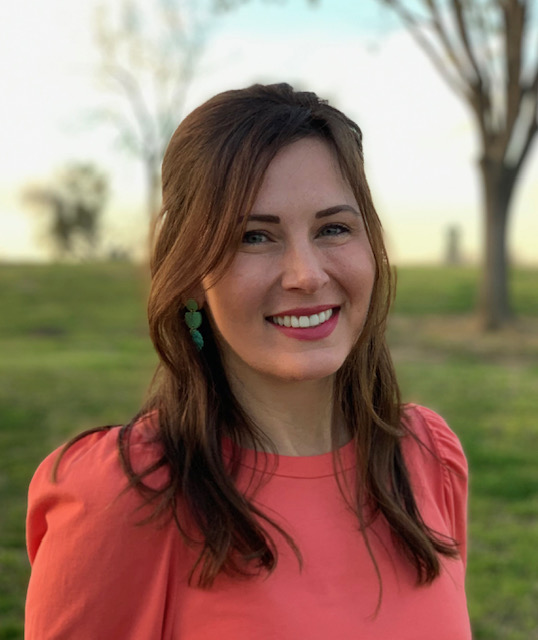
I came to Bakersfield in 2016 to join the faculty at California State University, Bakersfield, where I teach Spanish language and linguistics. I've raised my three children here, mentored hundreds of CSUB students, and put down roots in the Stockdale and Buena Vista area that I didn't expect to feel quite so permanent. Kern County has a way of doing that.
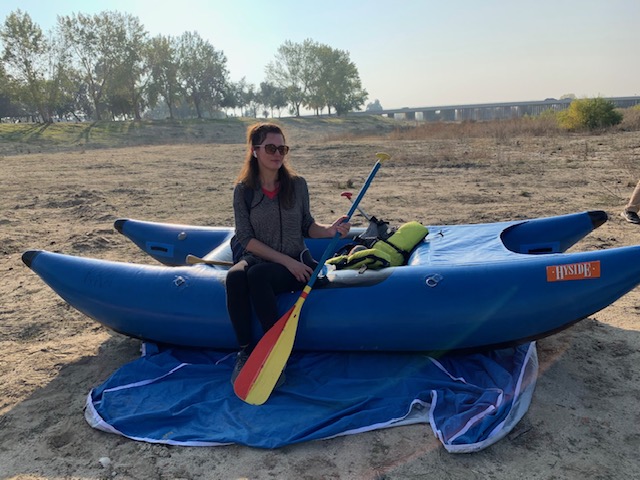
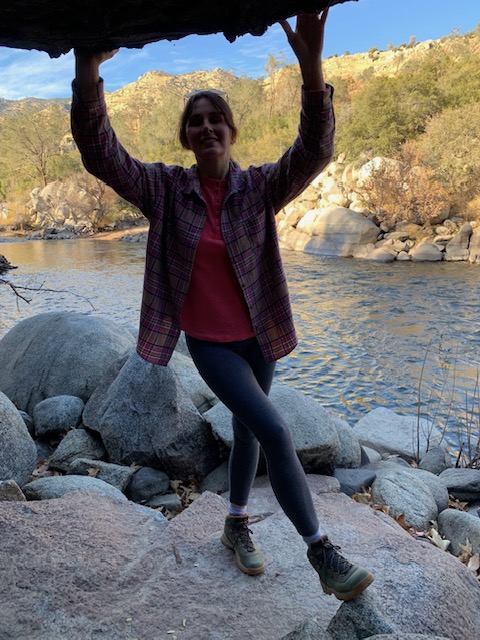
Water was not something I thought much about when I arrived. That changed. My family lives close to the Kern River, and it became one of our places — somewhere we'd go to walk and let the kids run around. But what we saw, again and again, was a river that wasn't there: a wide, dry bed of sand and gravel running through the middle of a major American city. It's a strange and desolate thing to stand in the bed of a river that's supposed to be flowing beneath you.
That desolation is what started my questions. Why is the river dry? Who decides where its water goes? And could it be different? The more I learned, the more I understood that these weren't accidents of nature or drought — they were the result of choices, made by an agency most residents have never heard of, largely out of public view.
What I found troubled me — not because the people involved were bad actors, but because the system was built to operate without meaningful public oversight. Water management in Kern County too often feels like a conversation held behind closed doors, with the implicit message to the rest of us being: trust us, we've got it handled. For an agency this powerful, managing this much of our shared future, that's not a sufficient answer.
My professional life has been devoted to language, communication, and making complex systems accessible to people who are too often shut out of them. That work has taken me into Kern County's Spanish-speaking communities — in schools, clinics, and legal settings — where I've seen firsthand how decisions made without those communities' input tend to serve them poorly. Water governance is no different. If KCWA isn't communicating with all of Kern County's residents — including the hundreds of thousands of Spanish speakers in this valley — then it isn't truly serving all of Kern County.
I'm running because I believe public agencies should answer to the public — all of it — and because I believe water solutions that serve farmers, cities, and the Kern River itself are possible, if the people making those decisions are actually trying to find them.
Running for office is one form of civic commitment. Here's the work that came before it.
Member of the district committee overseeing multilingual and bilingual education programming for BCSD students — one of the most linguistically diverse school districts in California.
Supporting the next generation of Kern County students through arts and community involvement.
Mentoring CSUB students in pursuit of California state court interpreting certification — bringing Spanish-language access to Kern County's legal system.
Advising CSUB's Spanish Club, building community among students and connecting to Kern County's Spanish-speaking communities.
Provided pro bono translation and interpretation services to Kern County health organizations, the CSUB Center for Gender & Sexuality Diversity, and CSUB Nursing's Community Preventive Health Collaborative.
If you're a Kern County resident who wants a more transparent, more accountable water agency — one that takes the Kern River seriously and gives urban Bakersfield a real voice — I'd love to hear from you.
Whether you want to volunteer, ask a question, or just say you're with us: reach out.